Deans T Plug Lipo Battery Explained: A UK Buyer's Guide
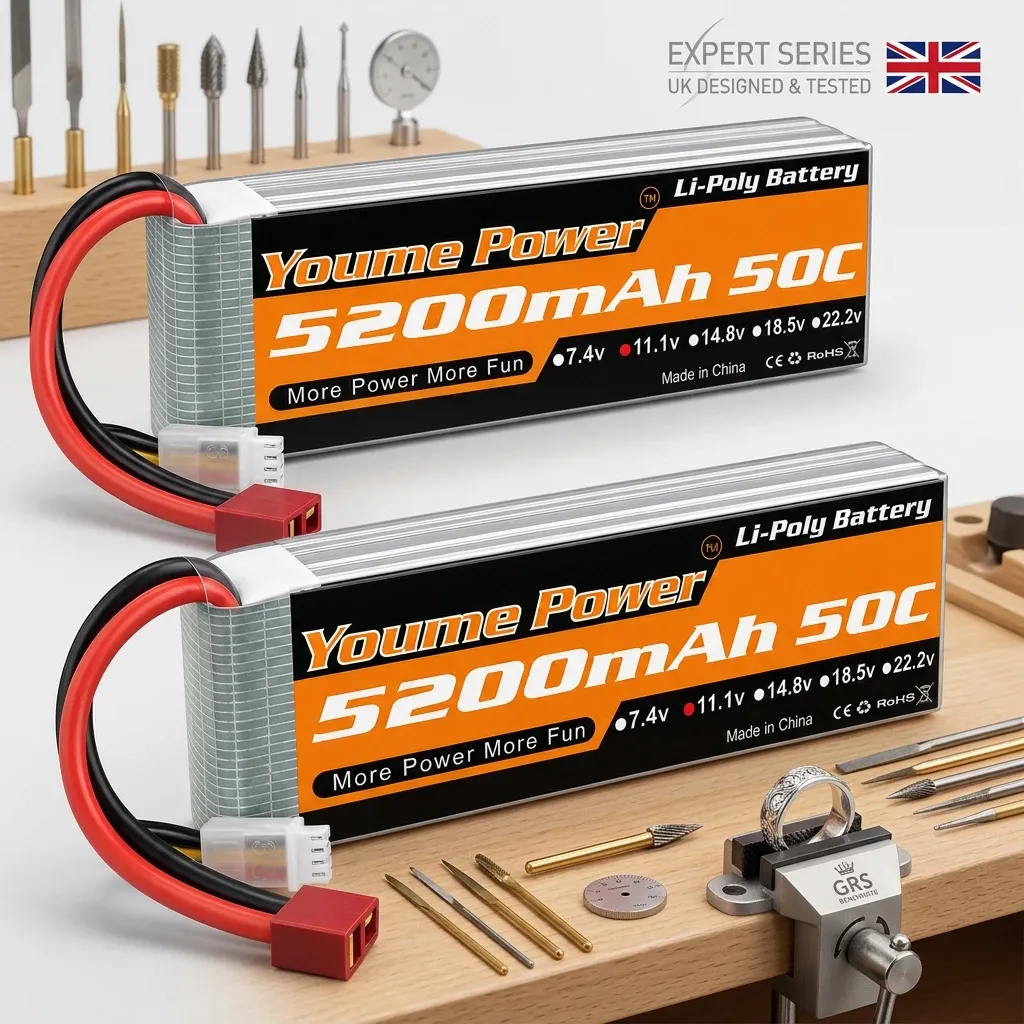
TL;DR: A Deans T plug LiPo battery uses a highly efficient, T-shaped, gold-plated connector designed for exceptionally low electrical resistance and high-current power delivery. Ideal for UK RC enthusiasts, these connectors prevent power bottlenecks, ensuring maximum performance from high-discharge (e.g., 50C) batteries whilst securely handling the intense demands of 1/8 and 1/10 scale RC vehicles.
When searching for a reliable power solution for your RC model, understanding exactly what a Deans T plug LiPo battery is will instantly improve your setup. Simply put, it is a lithium polymer power pack fitted with a specialised, low-resistance 'T' shaped connector. This specific configuration ensures maximum current flow from your battery to your Electronic Speed Controller (ESC) without the risk of overheating. Here at LiPo Packs UK, we know that choosing the right connector can make or break your RC experience, especially when pushing your models to the limit on a damp British weekend.
[Image: Close-up of a red Deans T plug connected to a LiPo battery wire, highlighting the gold-plated terminals]What is a Deans T plug on a LiPo battery?
A Deans connector (often called a T-plug due to the perpendicular arrangement of its flat pins) is a heavy-duty electrical connector widely used in the RC hobbyist community. Based on our extensive bench testing at LiPo Packs UK, the secret to its success lies in its physical design. The plug features gold-plated flat spring contacts that maintain constant, high-pressure tension when mated. Furthermore, this tension ensures a massive surface area for electrical transfer, which drastically reduces electrical resistance.
Consequently, when you use a Deans T plug LiPo battery, you are guaranteeing that the raw power of your battery isn't being wasted as heat at the connection point, but is instead being delivered directly to your motor.
Why are Deans connectors good for RC cars?
If you are running high-performance RC cars, power bottlenecks are your worst enemy. Deans connectors are incredibly popular because they are engineered for demanding applications.
- Low Resistance: They boast a fraction of the resistance found in standard Tamiya connectors.
- High Current Handling: They can comfortably handle 60 to 75 amps of continuous current, with burst ratings going much higher.
- Durability in UK Weather: The robust nylon housing and tight connection make them highly resilient against the vibrations of rough terrain and the damp conditions frequently encountered on British dirt tracks.
How do you match your Deans T plug with the right LiPo specs?
To get the most out of your setup, it is vital to pair the Deans connector with the appropriate battery specifications. For instance, a 3S 11.1V 5200mAh LiPo battery with a 50C discharge rate is an absolute powerhouse.
However, a 50C rating on a 5200mAh battery means it is capable of safely discharging a continuous 260 amps (5.2A x 50). While the Deans plug is rated lower for continuous current, its ability to handle immense short-term bursts makes it the perfect partner for this specific battery specification, giving your RC vehicle incredible off-the-line acceleration without melting the connector.
How do you safely solder a Deans connector?
Replacing an old connector with a Deans plug requires basic soldering skills. According to British Model Flying Association (BMFA) safety guidelines, extreme care must be taken when modifying LiPo batteries to prevent electrical shorts and the severe risk of thermal runaway.
- Never cut both wires at once: Doing so will instantly short the battery. Cut, strip, and solder one wire at a time.
- Use heat shrink tubing: Slide your heat shrink over the wire before you begin soldering.
- Tin the surfaces: Apply a small amount of high-quality, lead-free solder to both the battery wire and the Deans plug terminal.
- Join and heat: Press the tinned wire to the terminal and apply heat with a high-wattage soldering iron until the solder flows together seamlessly.
- Insulate: Slide the heat shrink over the exposed joint and apply heat to secure it.
Moreover, based on our workshop testing, using a soldering iron with at least 60 watts of power ensures you heat the joint quickly without transferring damaging heat down the wire into the LiPo cells.
Why choose a Deans 2-pack LiPo setup?
Many UK hobbyists are moving towards running dual battery setups. Purchasing a 2-pack of Deans T plug LiPo batteries offers distinct advantages. Firstly, wiring two packs in parallel doubles your run time (mAh) whilst maintaining the same voltage. Alternatively, wiring them in series doubles your voltage for extreme speed runs. Because Deans plugs are so compact, managing the wiring for a 2-pack setup inside a cramped RC chassis is significantly easier than with bulkier connector types.
[Image: Two LiPo batteries with Deans connectors wired in a parallel configuration inside an RC chassis]Frequently Asked Questions
Are Deans connectors better than XT60?
Both are excellent, high-current connectors. However, Deans plugs are generally more compact, which is ideal for tight spaces in 1/10 scale models. XT60s are often praised for being slightly easier to solder and grip, but based on performance, a genuine Deans T plug offers remarkably similar low-resistance power delivery.
What is the maximum amp rating for a Deans plug?
According to manufacturer specifications and real-world testing, a genuine Deans T plug can comfortably handle 60 amps of continuous current and up to 75-100 amps in short bursts, making it more than capable for most standard RC car and flight applications.
Can I charge a Deans LiPo battery on any charger?
You can use any standard LiPo balance charger, provided you have the correct Deans charging lead adapter. Always ensure you are using the 'LiPo Balance' programme on your charger to keep the individual cells within your battery perfectly equalised and safe.
Ready to upgrade your rig with LiPo Packs UK?
Shop Now — £63.99