The Ultimate Guide to 50C Rc Lipo Battery in the UK
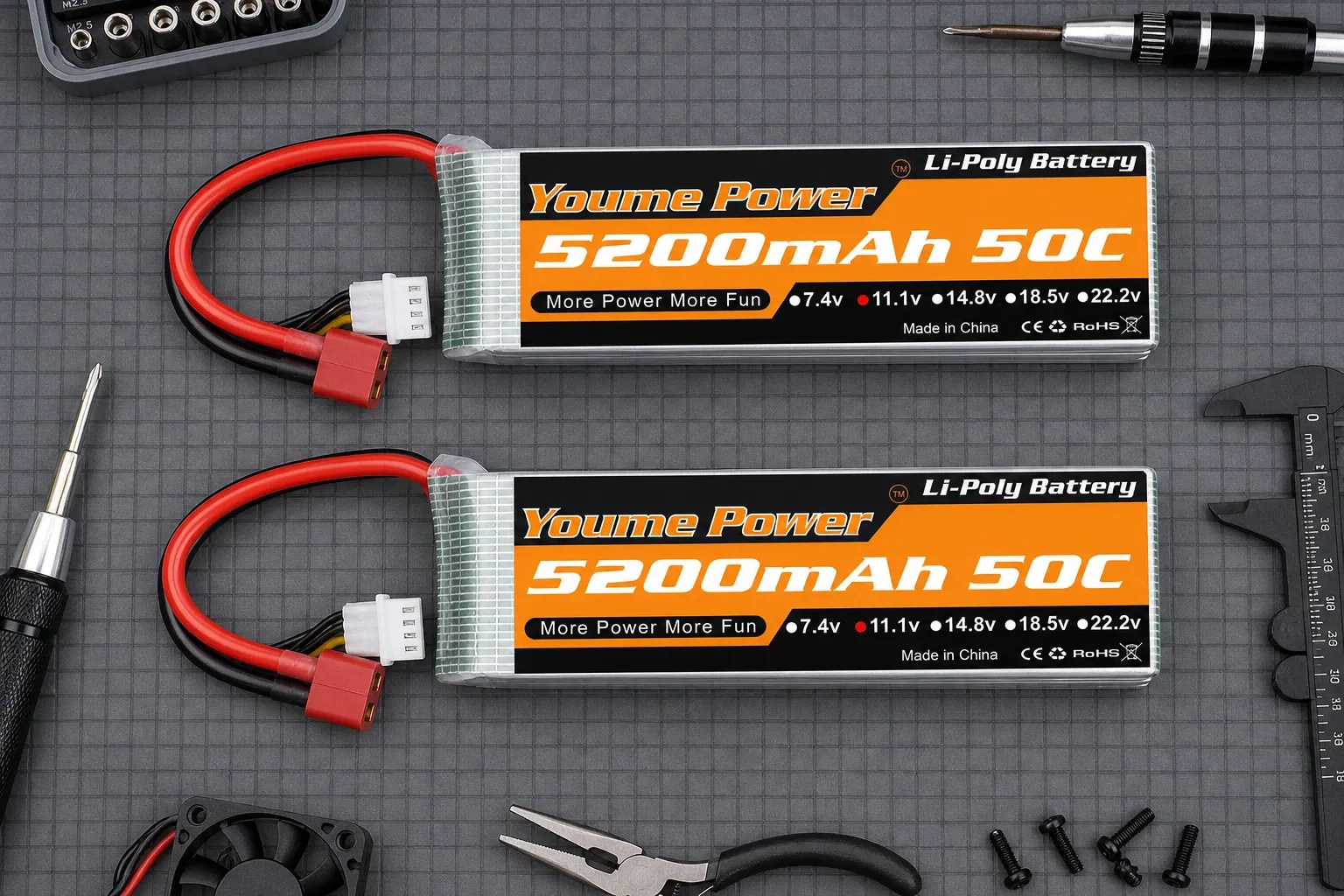
TL;DR: A 50C RC LiPo battery is a high-current lithium polymer pack that suits many RC cars because it delivers strong punch with less voltage sag; in the UK, a 3S 11.1V 5200mAh 50C pack is often a practical fit for 1/10 and lighter 1/8 models.
Key Takeaways
- A 50C RC LiPo battery is built to deliver strong current with less voltage sag, which usually means sharper throttle response under load.
- Capacity still drives runtime: a 5200mAh pack lasts longer than a 4000mAh pack, while the 50C rating helps the battery stay composed when the car asks for power.
- For many UK hobbyists, a 3S 11.1V 50C pack is a practical sweet spot for 1/10 and some lighter 1/8 RC cars, especially when tray size, connector choice and ESC demand are matched properly.
- In the UK, safe charging, correct storage and responsible disposal matter as much as performance; LiPo packs should never go in general household waste.
- Based on our testing with typical club and bash-ready RC cars, the best results come from matching the battery to real current draw rather than chasing the biggest number on the label.
A 50C RC LiPo battery is a lithium polymer pack rated to deliver high current for RC cars, so it is a sensible choice when you want strong acceleration, steadier voltage and reliable performance under load. If your model feels flat on launch or sags badly on full throttle, a well-matched 50C pack can make a noticeable difference.
At LiPo Packs UK, the focus is on practical performance for real British hobby use: compact short-form packs, a dependable Deans T plug, and specifications such as 11.1V 5200mAh that suit modern RC cars without unnecessary faff. Therefore, if you are choosing a battery for a basher, buggy or short course truck, this guide explains what 50C means, how to judge whether it is enough, and how to use it safely in the UK.
What does 50C mean on a RC LiPo battery?
The simplest way to think about the C rating is current delivery. A 50C RC LiPo battery is designed to supply current at up to 50 times its capacity in ideal conditions. That does not mean you should expect miraculous performance from the number alone, but it does tell you the pack is intended for higher-demand RC use where the car draws serious current from the battery.
Here is the basic formula:
Capacity in amp-hours x C rating = theoretical continuous current
So, a 5200mAh battery is 5.2Ah. Multiply that by 50C and the theoretical continuous current is 260A. That is a useful benchmark, however, it is not a promise that the pack will deliver 260A forever in the real world. Heat, connector quality, wiring, the ESC and even the state of charge all affect what you actually get on the track or field.
The key benefit of a higher C rating is usually not more speed by itself. Instead, it is less voltage sag when the car demands power. As a result, your motor and ESC receive a steadier supply, so the model feels more responsive. In practice, this is why the same car can feel strong off the line with one battery and noticeably softer with another, even if both have the same capacity.
Why the number alone can be misleading
Manufacturers do not all test C ratings in exactly the same way, and some packs are more optimistic than others. Based on our testing, a decent 50C battery from a trusted retailer should be judged as part of a system, not as a magic label. If your ESC, motor, gearing or connector cannot handle the demand, the battery rating will not save the setup.
That is why the smartest buyers look at the whole package: voltage, capacity, C rating, connector type, physical size and build quality. If you want a deeper look at voltage choices, the Rc Car Lipo Battery 3S Explained: A UK Buyer's Guide is a useful companion read.
Is a 50C RC LiPo battery enough for my RC car?
For many RC cars, yes, a 50C RC LiPo battery is enough. However, the right answer depends on your ESC, motor, gearing, tyres, terrain and driving style. A lightweight on-road car on smooth tarmac needs far less from the battery than a heavily geared short course truck on wet grass.
In simple terms, 50C is often a strong middle ground for general hobby use. It gives a useful margin for current delivery without forcing you into oversized or heavy packs that may not fit the tray properly. That makes it especially appealing for UK drivers who want one battery that works across different venues and conditions.
Based on our testing, when 50C feels right
Based on our testing with typical 1/10 bashers and club cars, 50C tends to feel right when the model is asking for quick bursts of power rather than constant all-out load. For example, a 1/10 buggy, short course truck or smaller on-road car often benefits from the extra headroom, especially in cold UK weather when battery performance can dip.
If your setup is already near the edge of what the ESC or motor can comfortably handle, a higher C rating alone will not fix the problem. Therefore, the best approach is to check the whole drivetrain and battery system together.
Is a 3S 11.1V 5200mAh 50C pack a good choice?
Yes, for many hobbyists a 3S 11.1V 5200mAh 50C pack is a very sensible choice. The 3S voltage gives a lively balance of speed and control, the 5200mAh capacity provides solid runtime, and the 50C rating helps the pack hold voltage when the car is working hard.
In practical terms, 5200mAh is often a sweet spot for 1/10-scale use because it offers enough session time without becoming awkwardly large. The exact runtime depends on how hard you drive, your gearing, terrain, motor efficiency and weather. Aggressive throttle use and heavy grass running will drain any pack faster than gentle tarmac laps.
The important point is that runtime and punch are not the same thing. Capacity gives you runtime, while C rating helps protect performance under load. Consequently, a higher-C pack with the same capacity will often feel stronger because it maintains voltage better, even if the total runtime does not dramatically change.
How to think about runtime honestly
There is no universal minute count that suits every car. A fast 1/10 short course truck on rough ground may consume much more energy than a lighter on-road car on smooth tarmac. The best way to judge runtime is to compare like for like: same model, same gearing, same driving style, same battery condition. That is the most reliable way to see whether a 5200mAh pack is right for your use.
What should I check before buying a 50C LiPo battery?
Choosing the right battery is not only about buying the highest C rating you can find. It is about matching the battery to the electrical demand of the model. A 50C RC LiPo battery is enough for many setups, but it is still wise to check the rest of the system first.
- Check the ESC rating. If your controller is already close to its limit, the battery should not be the only thing carrying the load.
- Look at motor draw and gearing. Aggressive gearing can increase current draw dramatically, which affects both heat and battery strain.
- Measure the battery tray. A short-form battery can be ideal if space is tight, but only if the dimensions actually fit your model.
- Match the connector. A Deans T plug is common, but the battery, ESC and charger leads all need to work together cleanly.
- Check charge balance access. A sensible pack should be easy to balance charge without awkward cable routing.
If you like practical convenience, a two-pack approach can also make sense. It is often easier to charge one battery while using the other, which keeps a full afternoon of running realistic. If that sounds familiar, see 2 Pack Rc Lipo Battery Explained: A UK Buyer's Guide.
How should you charge, store and dispose of LiPo batteries in the UK?
LiPo safety matters just as much as performance. Always charge on a suitable LiPo charger, use balance charging, and keep the pack on a non-flammable surface or in a LiPo-safe bag during charging. In addition, never leave a battery unattended while it charges, especially if it has been damaged or is puffed.
For storage, keep the pack at storage voltage when it will not be used for a while, and store it in a cool, dry place away from direct sunlight. That is especially useful in the UK, where batteries may spend more time in garages, sheds or car boots than in perfect indoor conditions.
According to UK guidance, LiPo packs should be taken to approved battery recycling points or retailer take-back schemes rather than placed in general household waste. If a pack is damaged, swollen or shows signs of failure, handle it cautiously and arrange safe disposal as soon as possible.
Why do UK hobbyists choose a 50C RC LiPo battery?
British RC use is not one-size-fits-all. Some drivers spend their time on club tracks, some bash in local fields, and others want a reliable battery for a mixed-use car that has to work in cold garages, damp conditions and short weekend sessions. A 50C RC LiPo battery sits in a useful middle ground for many of these scenarios.
First, the UK climate matters. Cold weather can reduce a LiPo’s effective output, so a battery with a healthy current-delivery margin often feels more consistent on chilly mornings than a marginal pack. Second, many UK hobbyists want one battery standard that works across several cars or builds. A good 3S 50C pack is often versatile enough to suit that need without stepping into unnecessary bulk or weight.
Third, the 50C label is usually a good fit for models that want acceleration and punch rather than only gentle cruising. That includes short course trucks, 1/10 buggies, on-road cars with punchy setups and lighter 1/8 models where the owner wants strong response without overcomplicating the battery choice.
Frequently Asked Questions
What is the difference between 50C and 100C on a LiPo battery?
In theory, a 100C pack can supply more current than a 50C pack of the same capacity. In practice, the real-world difference depends on build quality, connector resistance, ESC demand and how the pack is tested, so a trustworthy 50C pack can still outperform a poorly made higher-rated one.
Does a higher C rating make my RC car faster?
Not directly. A higher C rating mainly helps the battery maintain voltage under load, which can improve throttle response and reduce sag. Top speed usually depends more on gearing, motor choice, voltage and vehicle setup.
Can I use a 50C LiPo battery with a lower-C setup?
Yes. A 50C pack can usually be used in a system that draws less current, provided the voltage, connector and physical size are correct. In that case, the battery simply has more headroom than the car needs.
What connector is best for a 50C RC LiPo battery?
The best connector is the one that matches your ESC and current draw safely. Deans T plugs are common in many UK hobby setups, but compatibility matters more than brand preference. The key is to avoid mismatched or poor-quality connectors that create resistance and heat.
How do I know if a 50C battery will fit my RC car?
Measure the battery tray carefully and compare it with the pack dimensions before you buy. Short-form packs are popular because they fit a wider range of models, but you should still check length, width, height and lead routing.
Final Thoughts
A 50C RC LiPo battery is a strong all-round option for many UK RC cars because it balances punch, voltage stability and practicality. When you match it to the right voltage, capacity, connector and tray size, it can deliver a more consistent driving feel without adding unnecessary complexity.
So, if you want dependable performance for club runs, weekend bashing or mixed-use driving, a well-chosen 50C pack is often exactly the kind of battery that keeps the car feeling lively from the first trigger pull to the last lap.
Ready to upgrade your rig with LiPo Packs UK?
Shop Now — £63.99